Help & Knowledge
Frequently Asked Questions
Everything you need to know about Panchangam, Hindu festivals, Vedic traditions, and RYSAV.
🏛️About RYSAV
What is RYSAV — The Veda Samhithi?
+
RYSAV stands for 'Revive Your Sanatana Vedic Values'. It is a Telugu and Hindu spiritual platform dedicated to preserving Sanatana Dharma by providing daily Panchangam, accurate festival dates with Muhurtham timings, Vedic knowledge, Mythbusters, and Purohit services — in both English and Telugu.
What does RYSAV stand for?
+
RYSAV is an acronym for 'Revive Your Sanatana Vedic Values'. It also represents the four Vedas: Rig Veda, Yajur Veda, Sama Veda, and Atharva Veda — the foundational scriptures of Sanatana Dharma.
Is RYSAV available in Telugu?
+
Yes. RYSAV fully supports Telugu and English. Every page on the website can be switched between English and Telugu using the language toggle in the top navigation bar.
Who is RYSAV for?
+
RYSAV is for all Telugu-speaking Hindus — whether living in India (Telangana, Andhra Pradesh) or abroad — who want authentic Vedic knowledge, accurate panchang details, and a trustworthy resource for festivals and traditions.
📅Daily Panchangam
What is a Panchangam (Panchang)?
+
Panchangam (also spelled Panchang) is the Hindu almanac that provides five key astronomical/astrological elements for each day: Tithi (lunar day), Vaara (weekday), Nakshatra (lunar mansion), Yoga (auspicious combination), and Karana (half-day period). It also includes Rahu Kalam, Brahma Muhurtham, Yamaganda, and Gulika Kalam.
How does RYSAV calculate daily Panchangam?
+
RYSAV uses the Prokerala API with Lahiri (Chitrapaksha) ayanamsa, calculated for Hyderabad, Telangana coordinates (17.3850°N, 78.4867°E). The panchang is refreshed every day at 6:25 AM IST automatically.
What is Tithi?
+
Tithi is the lunar day in the Hindu calendar. It is calculated from the angular distance between the Sun and the Moon. There are 30 Tithis in a lunar month — 15 in Shukla Paksha (waxing moon) and 15 in Krishna Paksha (waning moon). Tithi determines the auspiciousness of each day for religious activities.
What is Nakshatra?
+
Nakshatra is one of 27 lunar mansions (star constellations) through which the Moon transits. Each Nakshatra spans 13°20' of the zodiac and has unique qualities, ruling deities, and significance for activities like travel, marriage, business, and religious ceremonies.
What is Rahu Kalam and why should it be avoided?
+
Rahu Kalam is a daily 90-minute inauspicious period associated with Rahu (the north lunar node). It is traditionally avoided for starting new ventures, travel, important decisions, or auspicious ceremonies. Rahu Kalam changes each day and varies by location.
What is Brahma Muhurtham?
+
Brahma Muhurtham is the most auspicious time of day, occurring approximately 1 hour 36 minutes before sunrise (two Muhurats before sunrise). It is the ideal time for meditation, prayer, yoga, and spiritual study. The name means 'time of Brahma' — associated with creation and divine inspiration.
What is Amrit Kaal?
+
Amrit Kaal (also Amrit Ghadi) is an auspicious period each day that is considered highly beneficial for starting important tasks, medical treatments, and spiritual activities. 'Amrit' means nectar — so Amrit Kaal is the 'time of nectar'.
What is Yamaganda?
+
Yamaganda (or Yama Ghanta) is a daily inauspicious period of 90 minutes associated with Yama, the god of death. Like Rahu Kalam, it should be avoided for auspicious activities and new beginnings.
What is Gulika Kalam?
+
Gulika Kalam is a 90-minute inauspicious daily period associated with Gulika (son of Saturn). It is considered unfavorable for auspicious activities, similar to Rahu Kalam and Yamaganda.
What is Dur Muhurtham?
+
Dur Muhurtham means 'inauspicious time period'. There are typically two Dur Muhurtham periods each day. They should be avoided for religious ceremonies, weddings, travel, and important new beginnings.
🪔Hindu Festivals
Which Telugu and Hindu festivals does RYSAV cover?
+
RYSAV covers 16 major Telugu and Hindu festivals: Maha Shivaratri, Holi, Ugadi, Sri Ramanavami, Guru Pournima, Varalakshmi Vratam, Rakhi Pournami, Vinayaka Chavithi, Janmashtami, Onam, Batukamma, Dusshera, Diwali, Bhai Dhuj, Nagula Chavithi, and Sankranthi.
What is Ugadi and when is it celebrated?
+
Ugadi is the Telugu and Kannada New Year, celebrated on the first day of the month of Chaitra in the Hindu lunisolar calendar. In 2026, Ugadi falls on March 19. It marks the beginning of a new Samvatsara (year cycle) and is celebrated with Ugadi Pachadi — a dish that combines all six tastes symbolising life's experiences.
What is the significance of Maha Shivaratri?
+
Maha Shivaratri ('Great Night of Shiva') is one of the most important Hindu festivals, observed on the 14th night of the dark fortnight (Krishna Chaturdashi) of Phalguna month. Devotees fast, stay awake all night, and worship Lord Shiva. It is believed that sincere worship on this night grants liberation (Moksha).
What is Vinayaka Chavithi?
+
Vinayaka Chavithi (Ganesh Chaturthi) celebrates the birth of Lord Ganesha, the elephant-headed deity who is the remover of obstacles and the god of beginnings. It falls on the fourth day (Chaturthi) of Shukla Paksha in Bhadrapada month — in 2026, on August 16.
What is Batukamma and why is it special to Telugu culture?
+
Batukamma is a floral festival unique to Telangana, celebrating Goddess Gauri (a form of Parvati). Women arrange flowers like Tangedu and Gunuka in cone-shaped arrangements and sing folk songs around them. It falls during Bhadrapada and Ashwija months and is a UNESCO-recognised cultural heritage of Telangana.
What is the difference between Rahu Kalam on festival days?
+
Even on festival days, Rahu Kalam applies and should be checked. RYSAV provides the specific Rahu Kalam timings for each festival's date, so you can plan your puja and celebrations during auspicious hours.
What is Varalakshmi Vratam?
+
Varalakshmi Vratam is a festival where married women worship Goddess Varalakshmi (a form of Lakshmi) for the prosperity and well-being of their families. It is observed on the Friday before the full moon in the month of Shravana. In 2026, it falls on August 7.
What is Guru Pournima?
+
Guru Pournima is a festival dedicated to spiritual and academic teachers. It falls on the full moon (Pournima) of the month of Ashadha. It honours the sage Veda Vyasa, compiler of the Vedas and Mahabharata. Disciples express gratitude to their gurus on this day.
📚Vedic Knowledge
What are the four Vedas?
+
The four Vedas are: (1) Rig Veda — the oldest, containing 1,028 hymns to the gods; (2) Yajur Veda — rituals and sacrificial formulas; (3) Sama Veda — melodic chants derived from the Rig Veda; (4) Atharva Veda — spells, charms, philosophical speculations. Together they form the foundation of Sanatana Dharma.
What is Sanatana Dharma?
+
Sanatana Dharma (often called Hinduism) means 'the eternal way of righteousness'. It encompasses a vast body of scriptures, philosophies, rituals, and ethical codes that guide human life toward spiritual liberation (Moksha). It includes the Vedas, Upanishads, Bhagavad Gita, Puranas, and Itihasas (Ramayana and Mahabharata).
What is the significance of the Om (ॐ) symbol?
+
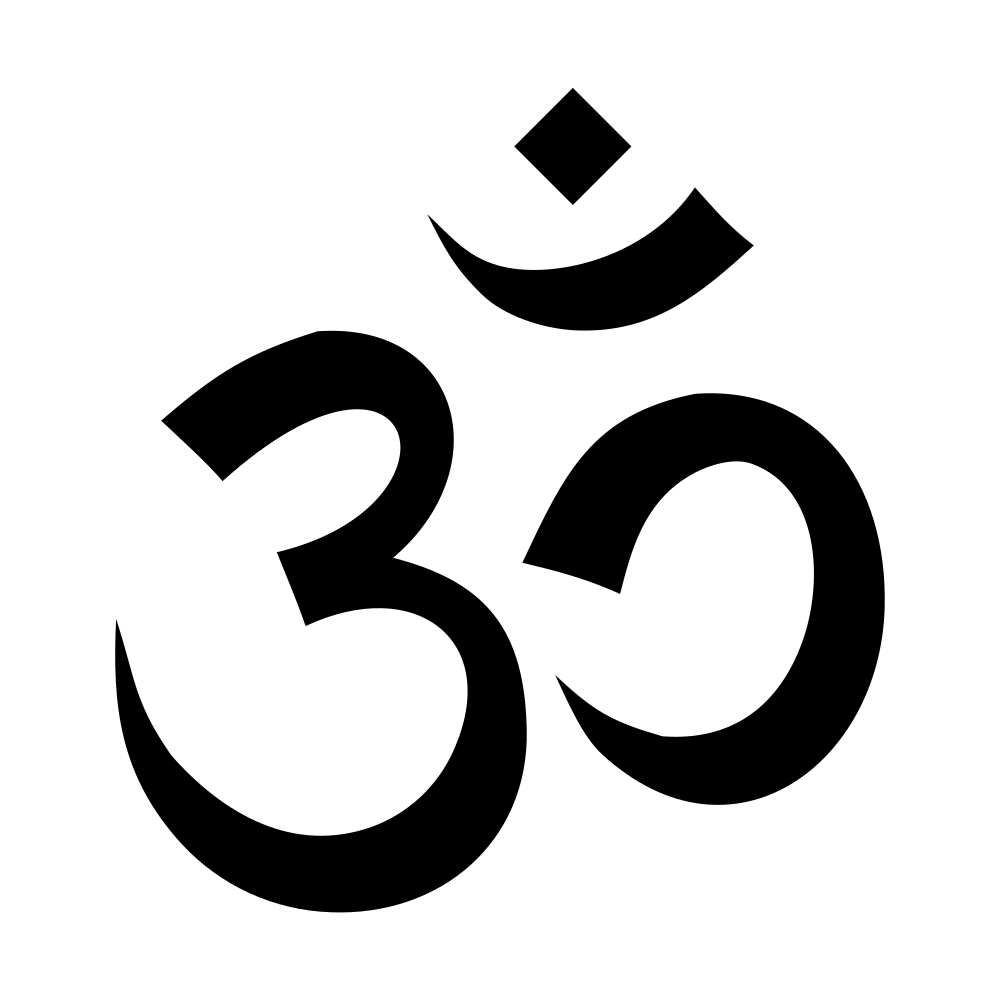
Om (Aum, ॐ) is the most sacred sound and symbol in Hinduism, Buddhism, and Jainism. In Vedic tradition, Om is considered the primordial sound of the universe — the sound from which all creation emerged. It represents the Trimurti (Brahma, Vishnu, Shiva) and is used to begin all Vedic prayers and mantras.
What is the Bhagavad Gita?
+
The Bhagavad Gita is a 700-verse Hindu scripture that is part of the epic Mahabharata. It is a dialogue between Prince Arjuna and Lord Krishna on the battlefield of Kurukshetra. The Gita covers key philosophical topics including Dharma (duty), Karma Yoga, Bhakti Yoga, Jnana Yoga, and the nature of the soul and liberation.
🙏RYSAV Services
Does RYSAV provide Purohit (priest) services?
+
Yes. RYSAV connects families with qualified, experienced Purohits (Vedic priests) for home pujas, festivals, naming ceremonies, weddings, and other religious rituals. Services are available both in-person (Hyderabad/Telangana) and online.
What is a Horoscope (Janma Kundali) and does RYSAV provide it?
+
A Janma Kundali (birth horoscope) is a Vedic astrological chart calculated from the exact date, time, and place of birth. It maps the positions of all nine planets across the 12 houses and 27 Nakshatras. RYSAV provides guidance on Vedic horoscope services.
What is Pooja Samagri?
+
Pooja Samagri refers to all the materials required for Hindu religious rituals and ceremonies — including flowers, incense (agarbatti), camphor (kapoor), vermillion (kumkum), turmeric (haldi), sacred thread (mauli), and other puja items. RYSAV provides guidance on what Samagri is needed for each festival and ritual.
Still Have Questions?
Browse our Vedic knowledge articles, check today's Panchangam, or explore all festival details.